
Progress Has Physical Limits
The discussion surrounding artificial intelligence usually focuses on three things: more powerful processors, larger models, and greater investment.
Yet there is one factor that does not necessarily expand at the same pace.
Electricity.
A new model can be trained within a few months. A new generation of processors can transform the capabilities of a data center. But building a transmission line, expanding an electrical grid, or adding new generating capacity often takes years.
This difference in speed creates one of the most important contradictions of the artificial intelligence era.
The digital economy is accelerating. The physical infrastructure supporting it cannot always keep pace.
And when two systems develop at different speeds, the slower one can determine the limits of the faster one.
How Much Energy Does Artificial Intelligence Need?
According to the International Energy Agency’s Key Questions on Energy and AI report, data centers consumed approximately 485 terawatt-hours of electricity in 2025.
Total electricity consumption by data centers increased by approximately 17% during 2025, while consumption at facilities focused specifically on artificial intelligence increased by approximately 50%.
Under the agency’s central forecast, data-center electricity consumption is expected to reach approximately 950 terawatt-hours by 2030.
That would represent an almost twofold increase within five years.
Gartner’s latest estimates also illustrate the intensity of near-term growth: from 447 terawatt-hours in 2025 to 565 in 2026 and 702 in 2027.
The IEA and Gartner figures are projections, not guaranteed levels of future consumption, and they are not directly comparable because they are based on different methodologies.
They nevertheless point in the same direction.
Electricity demand from digital infrastructure is growing faster than overall demand in many markets.
And the issue is not only how much electricity the world will need.
It is where, when, and with what degree of reliability that electricity will be available.
The Problem Is Not Just Energy Generation
A data center does not simply require access to electricity.
It requires sufficient capacity, an uninterrupted power supply, suitable distribution infrastructure, cooling, and the ability to expand.
The existence of available generation within a country does not mean that electricity can immediately be delivered to the location where a new data center is being built.
Between generation and consumption stand substations, transformers, cables, protection systems, permits, and interconnection projects.
The IEA estimates that grid constraints could delay approximately 20% of the global data-center capacity planned for construction by 2030.
In advanced economies, new transmission lines can take four to eight years to complete. At the same time, lead times for critical electrical equipment have increased.
This creates a paradox.
A technology company may have secured capital, processors, land, and customers, yet still be unable to bring its facilities online in time.
The problem is not a lack of investment intent.
It is the inability to convert that intent into operational infrastructure within the required timeframe.
In the age of artificial intelligence, time to power can become a competitive advantage.
For many years, digital businesses treated electricity primarily as an operating cost.
Today, it is taking on a different significance.
Access to reliable power can influence where a data center is located, when it becomes operational, and the return generated on capital that has already been invested.
This explains why major technology companies are exploring a broader range of solutions: long-term power purchase agreements, renewable energy, natural gas, storage, nuclear energy, and on-site generation.
None of these solutions is universal.
Renewable sources can provide competitively priced generation, but they require an appropriate combination of grid infrastructure, storage, and other energy sources to ensure continuous supply.
Natural gas provides dispatchable generation, but it also involves emissions, fuel costs, and equipment constraints.
Nuclear energy can provide stable, low-emission generation, but new projects face lengthy development timelines and significant capital requirements.
The solution will probably not be a single technology.
It will be a combination that varies according to location, time horizon, and the needs of each facility.

When Energy Is Generated Next to Data Centers
One of the most significant developments is the growing focus on on-site electricity generation.
The logic is straightforward.
If grid interconnection is delayed, some data-center operators may consider generating part or all of the power they require close to their facilities.
This does not eliminate every dependency. Fuel, permits, equipment, maintenance, and technical reliability are still required.
Under the right conditions, however, it can reduce dependence on the timetable for expanding the electrical grid.
Bloom Energy operates in this market.
The company develops solid oxide fuel-cell systems that convert the chemical energy of a fuel directly into electricity through an electrochemical process.
These systems can be installed close to the point of consumption and provide continuous electrical power.
In August 2026, Bloom announced an expansion of its partnership with MiTAC to provide on-site power for AI server-manufacturing facilities. The company stated that this segment of its business included nearly two dozen customers and approximately 250 MW of contracted capacity.
This development provides evidence of commercial demand for decentralized power generation.
It does not, however, prove that fuel cells will prevail over every competing technology.
Cost, natural-gas availability, emissions, maintenance, and the actual economics of each installation remain decisive factors.
There is also an important distinction for investors.
A technology can acquire strategic importance without the shares of the company providing it being attractive at every valuation.
The growth of a market and the return on an investment are two different questions.
Who Is Behind AI’s Energy Infrastructure?
The energy expansion required by artificial intelligence is not creating demand only for new generating stations.
It requires an entire infrastructure chain.
Transformers. Switchgear. Distribution systems. Power electronics. Cooling. Grid construction and maintenance.
These elements are not usually at the center of the discussion about AI.
Without them, however, new computing capacity cannot operate.
This gives rise to an interesting investment thesis.
Businesses that supply critical electrical equipment or undertake infrastructure projects may benefit from more than one technological development.
They do not necessarily need to know which artificial-intelligence model will prevail.
What matters is the existence of real demand for electrical installations and upgrades.
Companies such as Eaton, GE Vernova, Vertiv, Quanta Services, and Powell Industries are examples of businesses worth examining within the broader ecosystem.
They do not all have the same business model, the same exposure to AI, or the same ability to convert demand into profits.
Meaningful research must distinguish what proportion of their revenue is genuinely connected to these investments, how sustainable their profit margins are, and what expectations are already embedded in their valuations.
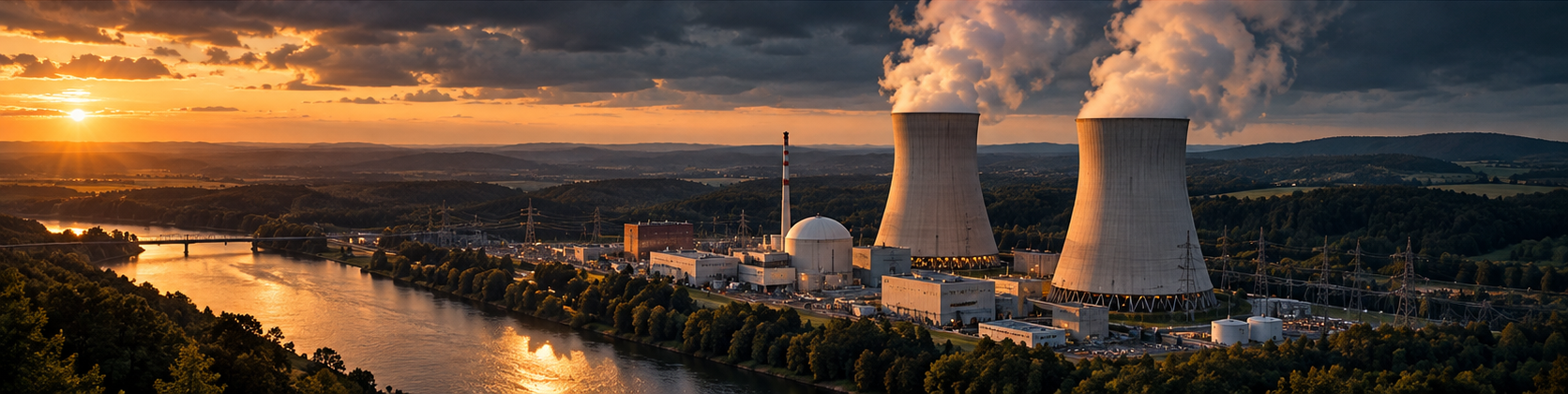
Nuclear Energy: The Solution That Takes Time
Rising demand for reliable power has renewed interest in nuclear energy.
The connection is understandable.
Large data centers require a continuous power supply. Nuclear plants can provide substantial quantities of electricity with low direct carbon emissions.
Here, however, we need to distinguish among three different realities.
The first concerns existing nuclear plants and the potential to extend their operating lives or increase their output.
The second concerns the construction of new conventional reactors.
The third concerns small modular reactors, commonly known as SMRs.
These three categories involve different implementation timelines, financial risks, and levels of technological maturity.
Existing facilities may, under certain conditions, offer solutions sooner. New nuclear technologies may become more important over time, but they should not be treated as a guaranteed answer to immediate needs.
The long-term potential is significant, but its realization remains uncertain.
Commercial implementation, however, remains the central challenge.
A Major Trend Does Not Necessarily Make a Good Investment
A powerful trend does not necessarily develop in a straight line.
The energy demand generated by artificial intelligence depends on the actual adoption of its applications, the utilization of computing infrastructure, and the energy efficiency of both hardware and software.
If new systems can perform more tasks using less energy, demand may grow more slowly than current expectations suggest.
Conversely, a decline in the cost of using AI could broaden adoption and generate additional demand.
The IEA considers multiple scenarios precisely because the ultimate trajectory remains uncertain.
There is also a second risk.
Large infrastructure investments may create temporary shortages, which in turn attract new competitors and additional production capacity.
What appears scarce today will not necessarily remain scarce forever.
For this reason, investment research must monitor not only the growth in demand but also the supply response.
The durability of a competitive advantage matters more than the intensity of a temporary shortage.
To evaluate how this thesis is developing, we focus on five variables:
- Actual electricity demand: whether forecasts translate into operational facilities and measurable consumption.
- Interconnection timelines: whether grid delays are worsening or beginning to ease.
- Equipment orders and deliveries: whether demand is generating actual revenue rather than merely project announcements.
- Financial performance: whether businesses are converting growth into cash flow and returns on capital.
- Valuations: how much future growth the market has already priced in.
These variables will determine whether the current investment thesis is strengthening, weakening, or requires revision.
Artificial Intelligence’s Next Challenge
Artificial intelligence is often presented as a software revolution.
In reality, it also represents an enormous physical-infrastructure challenge.
Behind every model are processors. Behind the processors are data centers. And behind them lies a complex system for generating, transmitting, and distributing electricity.
The expansion of this system is neither unlimited nor instantaneous.
That creates opportunities, but also risks.
For the long-term investor, the essential question is not simply which businesses will benefit from AI.
It is which companies can create sustainable economic value by solving genuine constraints on its development.
The next phase of artificial intelligence may be determined not only by how much computing capacity we can build, but also by how much of it we can actually power.
That is the energy constraint behind artificial intelligence.
Sources
- International Energy Agency — Key Questions on Energy and AI (2026)
- International Energy Agency — Energy and AI (2025)
- IEA — Energy demand from AI
- IEA — AI and energy security
- U.S. Department of Energy — 2024 Report on U.S. Data Center Energy Use
- Gartner — Data Center Electricity Consumption to Grow 26% in 2026
- Bloom Energy — 2026 Data Center Power Report
- Bloom Energy — Expanded MiTAC Partnership, August 2026